Take a MSF course.
Find an empty parking lot to practice.
Practice everything – figure 8s, slow speed turns, u-turns, emergency stopping, starting, stopping.
At first, if you don’t have confidence to drive the bike, just push it – forward, backward, try the brakes, lean it over, etc.
Practice over and over. When I went for my Motorcycle License driving test, there was about 40 of us. Most of them seemed pretty confident, until riders started failing. It made me worried, too – but I had practiced for hours, and I passed. You will, too – just put the time in. Practice every chance you get.
When you get better, practice on inclines. When you start to ride in traffic, go where the traffic is light.
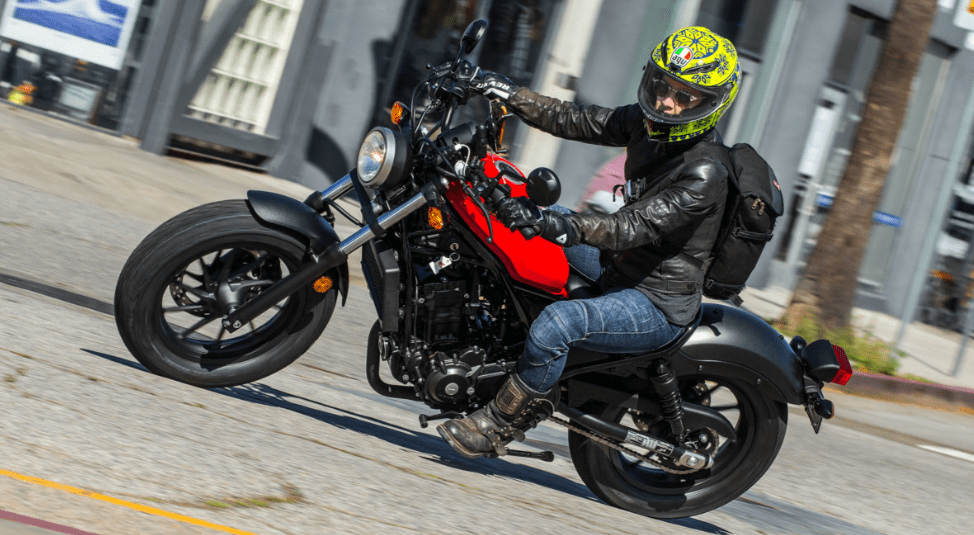
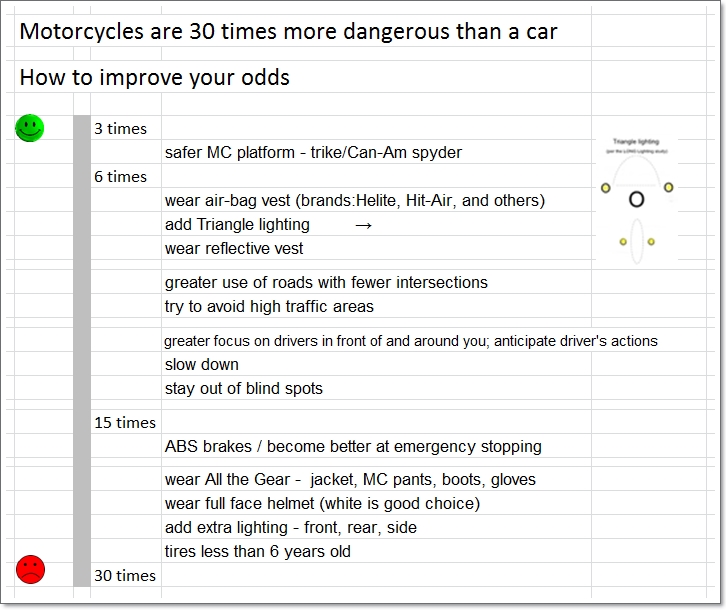
Here is what you can do to make riding your motorcycle safer (in order of risk reduction):
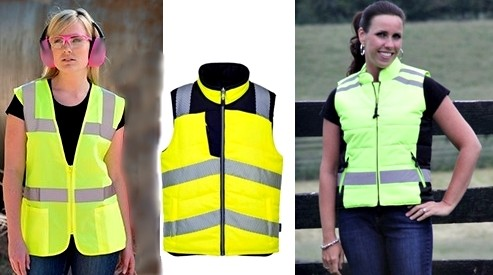
1) Wear a yellow, orange, or green reflective vest (Ansi 2 or 3) (37% less risk)
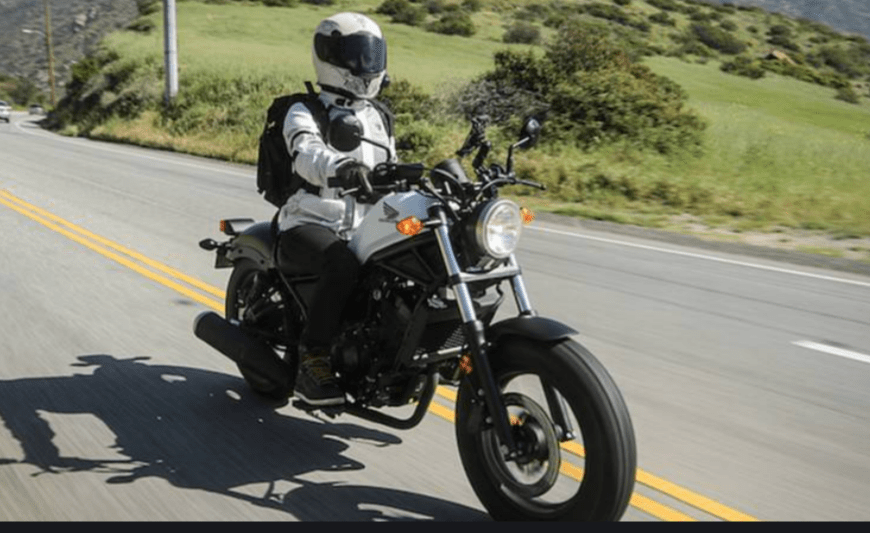
Getting a vest ($7 or $8) was about the biggest change I ever made as far as safety – for the most part, people stopped pulling out in front of me and also stopped tail-gating. I have seen many drivers start to change lanes, and then they see me and do not make the lane change.
2) Wear a full coverage helmet
3) Run your headlight in the daytime (27% less risk) Also, add two driving lights in front.
4) Wear a white helmet (24% less risk compared to black helmet)
5) Wear yellow, orange, or green reflective arm bands – two inches wide – one per side
6) If possible, get a bike with ABS (37% safer)
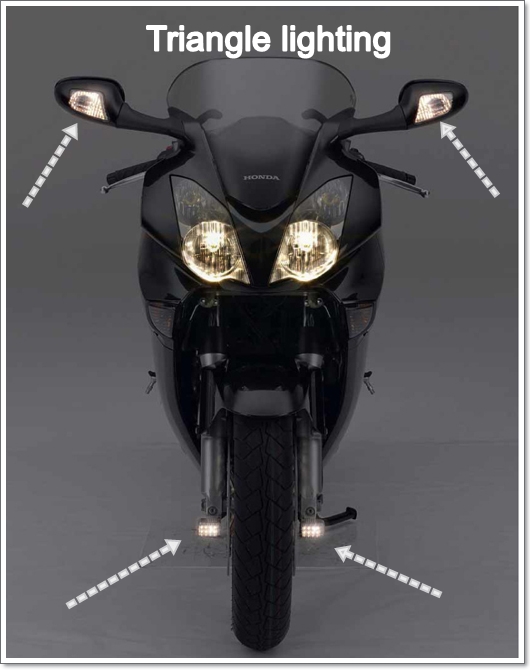
7) Add Triangle lighting to your motorcycle. It makes your motorcycle much more noticeable to on-coming cars.
8) Wear air-bag vest (Helite, Hit-Air, etc.) They cost around $600.
————————
• Increase your following distance. This is a very important way to reduce the chance of accidents on a bike. Many bike accidents are caused by the motorcycle driver.
• When you drive a motorcycle, allow no distractions, don’t daydream, and focus 100% on what you are doing and on what is happening in front of you.
• As you drive, check the road immediately ahead of you for possible problems first. When you have cleared the road immediately ahead, scan the road further ahead.
• Drive as though you expect drivers to pull out in front of you.
•Intersections are very dangerous for motorcyclists. Always slow down and watch carefully. Never “bomb through” an intersection.
• In most motorcycle accidents, the front brake is applied too lightly and the rear brake is applied too hard. Practice stopping at different speeds using the brakes more effectively.
• Practice/ride the bike every chance you get. The way to become a better motorcycle driver is to ride it everyday.
• When you stop (like for a traffic light), you should leave your bike in gear and watch your mirrors so you can drive away if the driver behind you does not stop. Also, when you stop, leave enough room between you and the driver ahead of you, so you have room to make a fast exit.
• Increase your taillights and brakelights by four to six times.
• Add two front auxiliary driving lights (yellow is more noticeable than white).
• Learn how to use the five lane positions for motorcycles.
• Never drive more than 15 to 20 mph faster than the lane beside you – speed differential is very dangerous if you are on a motorcycle.
• Wear all the gear – helmet, jacket, MC pants, gloves, and boots. Sneakers and regular jeans are not good enough.
——————
reader question: As a norwegian how long is this course? in hours? Im just curious. Im starting norwegian driving course soon. I have licence for cars, so i dont start from scratch, but still the mandatory driving classes in hours is 17. And than i have to add extra driving practise hours. …. …. answer: In the US, the MSF course consists of eight to ten hours of classroom instruction, an online ecourse, and ten hours of on-cycle, hands-on riding practice.
 Rebel500